
Introduction
The internet has become an essential part of modern life. Businesses, educational institutions, startups, and organizations all rely on websites to connect with customers and share information. A professionally designed website not only improves online visibility but also creates a strong first impression.
Behind every attractive and user-friendly website is the work of skilled web designers. These professionals create layouts, visuals, user interfaces, and responsive designs that help websites look professional and function smoothly.
As digital businesses continue growing, the demand for skilled web designers is increasing rapidly. Many students and beginners want to enter the technology and creative industry, but they often wonder where to start.
A web design course helps learners understand the fundamentals of website design, user experience, layout creation, responsive design, and modern web technologies. It is one of the best career-focused options for students who enjoy creativity, technology, and digital innovation.
Webliquidinfotech Institute provides industry-oriented web design training that focuses on practical implementation, modern tools, and real-world projects. The institute helps students develop creative and technical skills required for successful careers in the digital industry.
Whether you are a student, working professional, freelancer, or entrepreneur, learning web design can open doors to exciting career opportunities.
In this complete guide, you will learn what a web design course is, why it matters, career opportunities, industry demand, learning benefits, and how Webliquidinfotech Institute supports students through professional training.
What is Web Design Course?
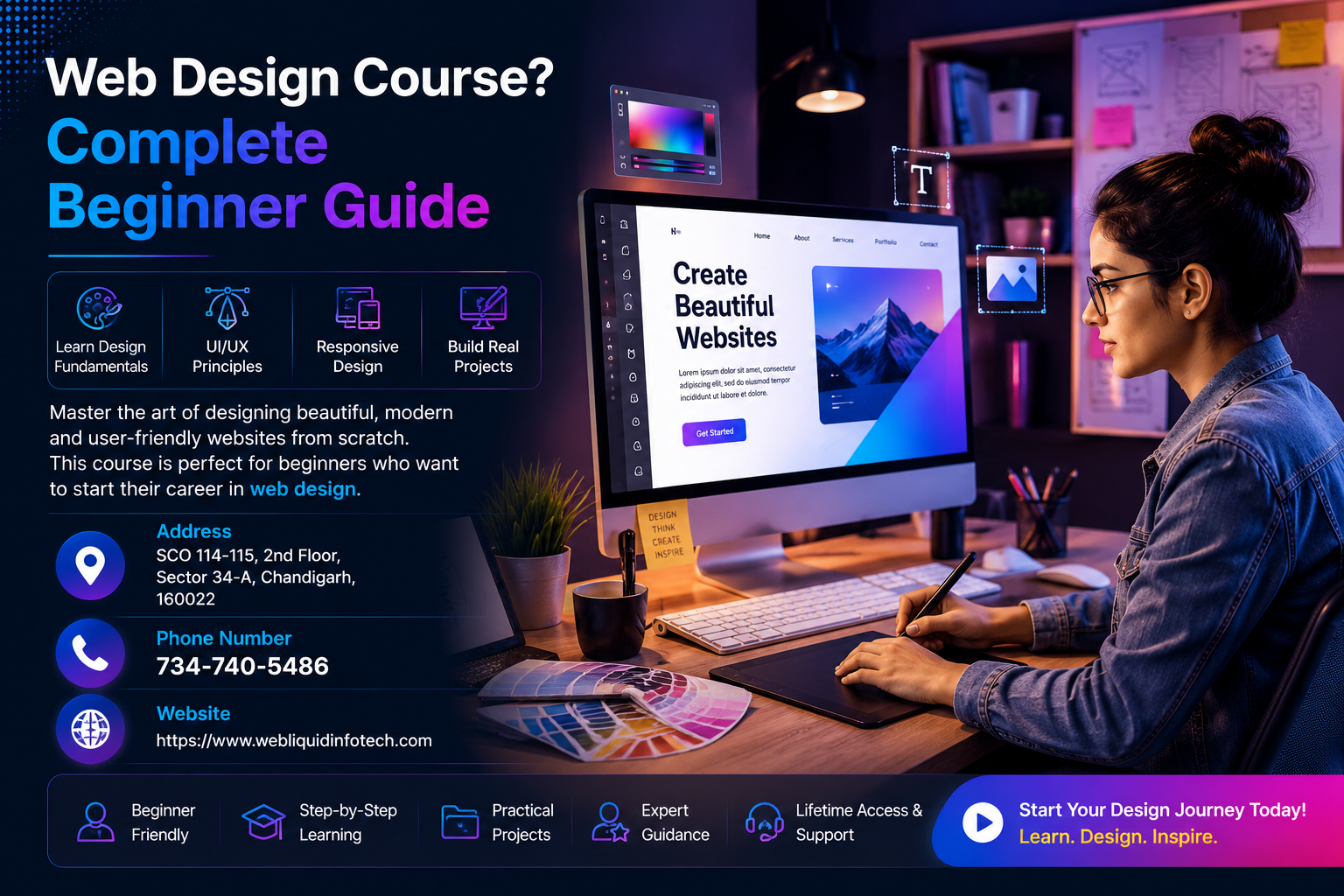
A web design course is a professional training program that teaches students how to design and create visually attractive, responsive, and user-friendly websites.
The course focuses on both creative and technical aspects of website development. Students learn how to design layouts, choose color combinations, create website structures, and improve user experiences.
Web design is not only about making websites look attractive. It also involves creating smooth navigation, responsive interfaces, and user-friendly experiences across different devices.
What Students Learn in a Web Design Course
A professional web design course usually includes:
- Website layout design
- Responsive web design
- HTML basics
- CSS styling
- User interface design
- User experience principles
- Typography and color theory
- Graphics integration
- Website optimization
- Interactive design elements
Modern web design courses also introduce students to tools and frameworks used in the industry.
Technologies and Tools Used in Web Design
Students learning web design often work with:
HTML
HTML helps create the structure of web pages.
CSS
CSS is used to style websites with colors, fonts, spacing, and layouts.
JavaScript Basics
JavaScript adds interactivity and dynamic features to websites.
Design Tools
Students may also learn professional tools such as:
- Figma
- Adobe XD
- Photoshop
- Canva
Responsive Design Frameworks
Modern web designers use frameworks like:
- Bootstrap
- Tailwind CSS
These tools help create responsive websites that work smoothly on desktops, tablets, and mobile devices.
Difference Between Web Design and Web Development
Many beginners confuse web design with web development.
Web design focuses on:
- Website appearance
- User experience
- Layouts and visuals
- Creative design elements
Web development focuses on:
- Website functionality
- Databases
- Coding logic
- Server-side systems
Both fields are connected and equally important in website creation.
Industry Relevance
Today, every business needs a professional online presence.
A well-designed website helps businesses:
- Build trust
- Improve user engagement
- Increase customer interaction
- Strengthen brand identity
- Improve online visibility
This growing demand makes web design an important and future-focused career option.
Why is Web Design Important?
Growing Digital Industry
The digital industry continues to expand rapidly.
Businesses, startups, and organizations are investing heavily in websites and digital platforms to connect with customers.
As a result, skilled web designers are highly valuable in today’s market.
High Demand for Skilled Designers
Companies require creative professionals who can build attractive and responsive websites.
Industries hiring web designers include:
- E-commerce
- Education
- Healthcare
- Digital marketing
- Media and entertainment
- Real estate
- IT and software services
The demand for skilled web designers continues to grow across multiple sectors.
Excellent Career Opportunities
A web design course can help students explore different career paths.
Professionals can work as:
- Web designer
- UI designer
- Front-end designer
- Graphic designer
- Website consultant
- Freelance web designer
This field offers flexibility and long-term growth opportunities.
Creative and Technical Learning
Web design combines:
- Creativity
- Technology
- Visual communication
- Problem-solving
Students who enjoy designing and innovation often find web design highly engaging and rewarding.
Freelancing Opportunities
Many web designers work independently with clients worldwide.
Freelancing allows professionals to:
- Work remotely
- Build personal brands
- Handle multiple projects
- Earn flexible income
Future Scope
The future of web design is extremely promising because businesses continue moving online.
Modern technologies such as:
- Mobile-first websites
- Interactive interfaces
- AI-based design tools
- Responsive web applications
- User-centered design systems
are increasing the need for skilled web design professionals.
How Webliquidinfotech Institute Helps Students Learn Web Design
Choosing the right training institute is important for building strong technical and creative skills.
Webliquidinfotech Institute focuses on practical learning, industry-oriented training, and project-based education to help students become confident web designers.
Industry-Oriented Curriculum
The institute provides updated training according to current industry standards.
Students learn:
- Website structure
- Responsive web design
- UI design principles
- CSS styling techniques
- Front-end basics
- Modern design tools
- Website optimization
- Project development
The curriculum is designed to provide both theoretical understanding and practical implementation.
Practical Training Approach
Practical learning is essential in web design education.
Students receive hands-on experience through:
- Live projects
- Website design assignments
- Responsive layout practice
- Real-world scenarios
- Creative design exercises
This approach improves technical confidence and design understanding.
Beginner-Friendly Teaching
Many beginners feel nervous about technical subjects.
The trainers at Webliquidinfotech Institute explain concepts step by step in a simple and easy-to-understand manner.
Students receive continuous guidance throughout their learning journey.
Real-World Exposure
Project-based learning helps students understand:
- Professional workflows
- User experience design
- Website functionality
- Industry expectations
This practical exposure improves job readiness.
Career-Focused Learning
The institute focuses on helping students build industry-ready skills.
Students gain knowledge about:
- Responsive website design
- Design optimization
- Professional project handling
- Creative interface building
These skills help students perform confidently in interviews and workplace environments.
Who Should Enroll in a Web Design Course?
A web design course is suitable for learners from different educational and professional backgrounds.
Students and Freshers
Students interested in creative technology and digital careers can benefit greatly from web design training.
Learning web design early improves internship and placement opportunities.
Working Professionals
Professionals who want to switch careers or upgrade their digital skills can learn web design to enter the growing technology industry.
Freelancers
Freelancers can use web design skills to provide services such as:
- Website design
- Landing page creation
- Portfolio website design
- E-commerce design
- Website maintenance
Entrepreneurs and Business Owners
Business owners who understand web design can improve their online branding and manage digital projects more effectively.
Designers and Creators
Graphic designers, content creators, and digital marketers can improve their professional capabilities by learning web design concepts.
Benefits of Learning at Webliquidinfotech Institute
Strong Creative and Technical Skills
Students develop:
- Website design knowledge
- Responsive design skills
- Technical confidence
- Creative thinking abilities
- User experience understanding
These skills are highly valuable in the modern digital industry.
Better Career Opportunities
Web design skills create opportunities in multiple industries.
Students can apply for different technical and creative roles.
Practical Experience
The institute emphasizes project-based learning.
Students work on practical assignments that improve:
- Design confidence
- Technical understanding
- Portfolio quality
- Industry readiness
Job Readiness
Students become familiar with:
- Professional workflows
- Client requirements
- Design standards
- Team collaboration
This improves interview preparation and workplace performance.
Portfolio Development
Students build professional projects during training.
A strong portfolio helps showcase:
- Creativity
- Technical skills
- Real project experience
- Design capabilities
Portfolios are highly important for job applications and freelancing opportunities.
Continuous Learning Opportunities
After learning web design basics, students can explore advanced fields such as:
- UI/UX design
- Front-end development
- Graphic design
- Digital marketing
- Full-stack development
- Interactive design systems
This creates long-term career growth opportunities.
Career Opportunities After Completing a Web Design Course
Students who complete web design training can explore multiple career options.
Web Designer
Web designers create attractive and responsive website layouts.
Their responsibilities include:
- Layout creation
- Website styling
- Responsive design
- User experience improvement
UI Designer
UI designers focus on creating visually engaging interfaces for websites and applications.
Front-End Designer
Front-end designers combine design and coding to create interactive web pages.
Graphic Designer
Graphic designers create visuals, banners, icons, and creative elements for digital platforms.
Freelance Web Designer
Freelancers can work independently with clients and provide website design services.
Website Consultant
Website consultants help businesses improve online design and user experiences.
Industry Sectors Hiring Web Designers
Web design professionals are required in:
- IT companies
- Digital marketing agencies
- E-commerce businesses
- Educational institutions
- Media companies
- Healthcare organizations
- Startups
- Real estate firms
The wide industry demand creates strong career stability and growth.
Importance of Practical Learning in Web Design
Web design is a skill-based field.
Students need practical implementation experience to improve their creativity and technical understanding.
Practical learning helps students:
- Create responsive websites
- Improve layout design
- Understand user experience
- Solve design challenges
- Build professional projects
This is why project-based learning is highly important.
Webliquidinfotech Institute focuses strongly on practical assignments and real-world project experience.
Why Web Design is a Smart Career Choice in 2026
The online industry is growing continuously.
Businesses are investing in:
- Professional websites
- Mobile-responsive platforms
- User-friendly interfaces
- Digital branding
- Interactive customer experiences
This creates excellent demand for web design professionals.
Learning what is web design course can help students understand how to enter the growing digital and creative industry.
The field offers:
- Creative career opportunities
- Flexible work options
- Freelancing possibilities
- Remote job opportunities
- Continuous learning growth
These benefits make web design one of the most exciting career choices today.
Learning Environment at Webliquidinfotech Institute
A positive learning environment helps students gain confidence more effectively.
Webliquidinfotech Institute focuses on:
- Interactive sessions
- Practical assignments
- Industry-oriented projects
- Individual guidance
- Creative skill enhancement
The institute helps students improve their understanding step by step through structured training.
Focus on Real Projects
Students receive opportunities to create practical website projects during training.
This helps them understand:
- Professional workflows
- Website creation processes
- Responsive design implementation
- Client-oriented project handling
Beginner-Friendly Approach
The training methodology is designed for beginners from all educational backgrounds.
Students receive proper guidance and support throughout the course.
Institute Details
Students interested in professional web design training can connect with Webliquidinfotech Institute using the details below:
Address
SCO 114-115, 2nd Floor, Sector 34-A, Chandigarh, 160022
Phone Number
734-74O-5486
Website
https://www.webliquidinfotech.com
The institute provides industry-focused training programs designed to help students build practical and job-ready skills.
Conclusion
Web design has become one of the most valuable skills in the modern digital world. Businesses across every industry require attractive, responsive, and user-friendly websites to build strong online visibility and improve customer experiences.
A web design course helps students understand website creation, responsive layouts, user interface design, and modern web technologies. It combines creativity with technical learning, making it an excellent career option for students, freelancers, professionals, and entrepreneurs.
With growing industry demand, freelancing opportunities, and continuous digital transformation, web design offers excellent long-term career potential.
Webliquidinfotech Institute helps students build strong technical and creative foundations through practical training, industry-oriented learning, and real-world project exposure. The institute focuses on beginner-friendly education that prepares learners for professional success.
If you want to build a future-focused career in the digital industry, learning web design can be an excellent step toward professional and creative growth.
FAQs
1. What is a web design course?
A web design course teaches students how to create attractive, responsive, and user-friendly websites using design principles and web technologies.
2. Who can join a web design course?
Students, beginners, freelancers, working professionals, entrepreneurs, and anyone interested in website design can join a web design course.
3. Is web design a good career option in 2026?
Yes, web design is a highly in-demand career field with excellent job opportunities, freelancing options, and future growth potential.
4. What skills are taught in a web design course?
Students learn HTML, CSS, responsive design, layout creation, UI principles, website styling, and basic interactive design concepts.
5. Does Webliquidinfotech Institute provide practical training?
Yes, Webliquidinfotech Institute focuses on practical learning, live projects, creative assignments, and industry-oriented training.
6. What career opportunities are available after completing a web design course?
Students can work as web designers, UI designers, front-end designers, graphic designers, website consultants, or freelance web designers.