
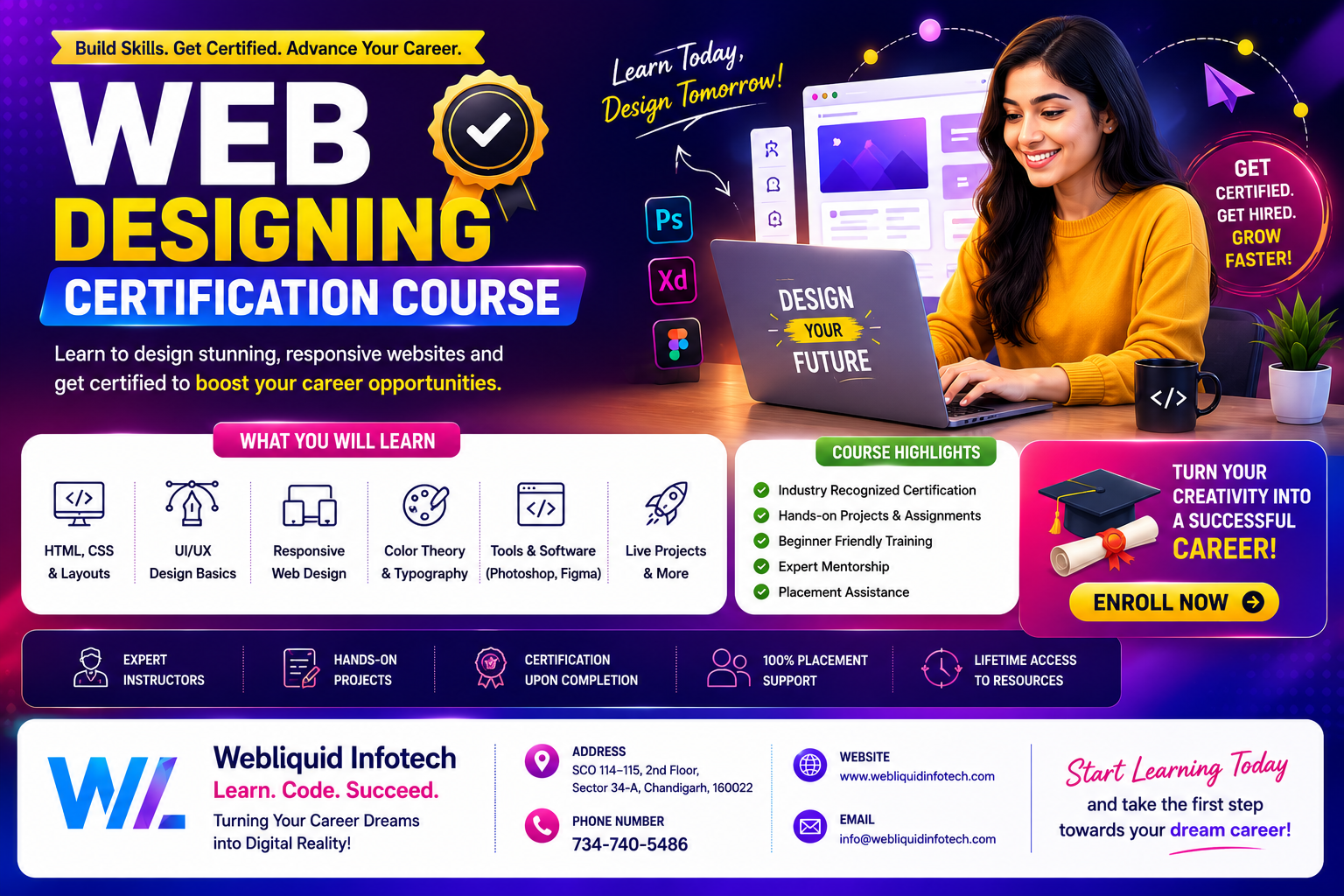
Introduction
The digital world is expanding rapidly, and websites have become one of the most important tools for businesses, organizations, startups, and personal brands. Today, almost every company needs a professional website to improve online visibility, attract customers, and strengthen branding.
From e-commerce businesses and educational institutions to healthcare organizations and digital marketing agencies, websites play a major role in communication and customer engagement.
As businesses continue investing in digital platforms, the demand for skilled web designers is increasing across industries.
Because of this growing demand, many students, freshers, freelancers, and working professionals are now interested in joining a web designing certification course to build career-focused digital skills.
A professional certification course helps students understand website design, responsive layouts, user interface concepts, and modern front-end technologies through practical learning and industry-oriented training.
Certification programs also improve professional credibility and help learners gain recognition in the competitive job market.
Webliquidinfotech Institute provides beginner-friendly and industry-oriented web designing training with practical implementation, live projects, and real-world exposure. The institute focuses on helping students build creative confidence and technical expertise.
In this complete guide, you will learn about web designing, what a certification course includes, industry demand, career opportunities, benefits of certification training, and how Webliquidinfotech Institute helps students become industry-ready professionals.
What is Web Designing?
Web designing is the process of creating visually attractive and user-friendly websites.
It focuses on:
- Website layouts
- Colors and typography
- User interfaces
- Responsive design
- Navigation systems
- Website structure
- User experience
The main goal of web designing is to create websites that are visually appealing, easy to navigate, and functional across different devices.
Main Areas of Web Designing
Web designing includes several important areas.
User Interface Design
UI design focuses on creating interactive website elements such as:
- Buttons
- Menus
- Forms
- Icons
- Navigation systems
User Experience Design
UX design improves usability and customer satisfaction by making websites easy to use.
Responsive Design
Responsive design ensures websites work properly on:
- Mobile phones
- Tablets
- Laptops
- Desktop screens
Responsive websites are extremely important because most internet users browse websites through smartphones.
Front-End Design
Front-end design combines visual creativity with coding technologies such as:
- HTML
- CSS
- JavaScript basics
These technologies help create responsive and interactive websites.
What is a Web Designing Certification Course?
A web designing certification course is a professional training program that teaches students website design skills and provides certification after course completion.
The course focuses on:
- Creative design principles
- Website layouts
- Responsive design
- User interface concepts
- Front-end basics
- Website optimization
- Practical project development
Certification courses help students build both creative and technical knowledge.
Importance of Certification
A certification course helps students:
- Improve professional credibility
- Build technical confidence
- Strengthen resumes
- Increase job opportunities
- Showcase verified skills
Certified training also helps students stand out during interviews and freelancing projects.
Skills Taught in a Web Designing Certification Course
A professional certification course teaches several important design and technical skills.
HTML
HTML creates the structure of websites.
CSS
CSS styles websites using:
- Colors
- Fonts
- Layouts
- Spacing
- Responsive design
Responsive Website Design
Responsive design helps websites function properly across all devices.
Basic JavaScript
JavaScript basics help students create interactive website elements.
UI and UX Concepts
Students learn:
- User interface design
- User experience principles
- Navigation improvement
- Website usability
Design Tools
Modern web designers use tools such as:
- Figma
- Adobe XD
- Canva
- Photoshop
These tools help improve visual presentation and design quality.
Why Web Designing is Important Today
Growing Digital Industry
Every business today needs a strong online presence.
A professionally designed website helps businesses:
- Build customer trust
- Improve online visibility
- Increase engagement
- Promote products and services
- Strengthen branding
This creates strong demand for web designers.
High Industry Demand
Industries hiring web designers include:
- IT companies
- E-commerce businesses
- Educational institutions
- Healthcare organizations
- Marketing agencies
- Media firms
- Startups
- Real estate companies
This broad demand creates excellent career opportunities.
Creative and Technical Career
Web designing combines:
- Creativity
- Technology
- Problem-solving
- Visual communication
- User-focused thinking
Students who enjoy creativity and digital technology often find web designing highly rewarding.
Freelancing Opportunities
Many web designers work independently with clients worldwide.
Freelancers can provide services such as:
- Website design
- Landing page creation
- Portfolio website development
- Website redesign
- UI design services
Freelancing offers flexibility and remote work opportunities.
Future Scope
The future of web designing is extremely promising.
Modern trends such as:
- Mobile-first design
- Interactive interfaces
- User-focused experiences
- AI-powered design tools
- Responsive websites
are increasing the demand for skilled web designers.
Why Certification Matters in Web Designing
A certification course helps students gain structured learning and practical experience.
Professional Recognition
Certification demonstrates that students have completed professional training and gained technical knowledge.
Better Job Opportunities
Certified students often receive better opportunities during recruitment processes.
Improved Portfolio Quality
Certification programs usually include practical projects that help students build strong portfolios.
Industry Readiness
Students gain exposure to modern design standards and professional workflows.
Skill Validation
Certification validates both technical and creative abilities.
Importance of Practical Learning in Web Designing
Web designing is a skill-based field.
Students need implementation experience to improve:
- Creative confidence
- Technical understanding
- Responsive design skills
- Website usability knowledge
- Project handling abilities
Project-based learning helps students understand how professional websites are created.
Practical learning also improves portfolio quality and job readiness.
How Webliquidinfotech Institute Helps Students Learn Web Designing
Choosing the right institute is important for building strong creative and technical foundations.
Webliquidinfotech Institute focuses on beginner-friendly education and practical implementation.
Industry-Oriented Curriculum
The curriculum is designed according to modern industry requirements.
Students learn:
- HTML
- CSS
- Responsive design
- UI design concepts
- Website layouts
- Front-end basics
- Website optimization
- Project development
The course combines theory with practical implementation.
Practical Training Approach
Students receive hands-on learning through:
- Live design sessions
- Website development projects
- Real-world assignments
- Responsive design exercises
- Creative tasks
This practical exposure improves technical understanding and design confidence.
Beginner-Friendly Teaching
Many beginners feel nervous about technical subjects and coding.
The trainers at Webliquidinfotech Institute explain concepts step by step in simple language that helps students learn comfortably.
Real-World Exposure
Project-based learning helps students understand:
- Professional workflows
- Website functionality
- User experience principles
- Industry standards
This practical exposure improves job readiness.
Career-Focused Learning
The institute focuses on helping students become industry-ready professionals.
Students gain understanding of:
- Design standards
- Responsive interfaces
- Project handling
- Creative problem-solving
These skills improve workplace confidence and interview preparation.
Who Should Enroll in a Web Designing Certification Course?
Web designing certification courses are suitable for learners from different educational and professional backgrounds.
Students and Freshers
Students interested in creativity and technology can build strong career opportunities through web designing training.
Working Professionals
Professionals looking to switch careers or improve digital skills can benefit from learning web designing.
Freelancers
Freelancers can use web designing skills to provide:
- Website design services
- Portfolio website creation
- Business website development
- Landing page design
- Website redesign services
Entrepreneurs and Business Owners
Business owners who understand web designing can manage digital branding and online projects more effectively.
Designers and Creators
Graphic designers, content creators, and digital marketers can improve their professional capabilities by learning web design concepts.
Benefits of Learning at Webliquidinfotech Institute
Strong Creative and Technical Skills
Students improve:
- Website design abilities
- Responsive design understanding
- Technical confidence
- Creative thinking
- User experience knowledge
These skills are highly valuable in modern digital industries.
Better Career Opportunities
Web designing skills create opportunities across multiple industries.
Students can apply for technical and creative job roles.
Practical Experience
The institute strongly focuses on project-based learning.
Practical assignments improve:
- Portfolio quality
- Technical understanding
- Industry readiness
- Design confidence
Job Readiness
Students become familiar with:
- Professional workflows
- Team collaboration
- Design standards
- Client project handling
This improves interview preparation and workplace performance.
Portfolio Development
Students build projects during training that showcase:
- Creativity
- Technical skills
- Responsive websites
- Real-world experience
Strong portfolios improve job and freelancing opportunities.
Continuous Learning Opportunities
After learning web designing basics, students can explore:
- UI/UX design
- Front-end development
- Graphic design
- Full-stack development
- Digital marketing
This creates long-term career growth opportunities.
Career Opportunities After Completing Certification Training
Students who complete web designing certification training can explore multiple career paths.
Web Designer
Web designers create attractive and responsive website layouts.
UI Designer
UI designers focus on creating user-friendly website interfaces.
Front-End Designer
Front-end designers combine coding and design to build interactive websites.
Graphic Designer
Graphic designers create visual elements for websites and digital platforms.
Freelance Web Designer
Freelancers can work independently with local and international clients.
Website Consultant
Website consultants help businesses improve online branding and website experiences.
Industries Hiring Web Designers
Web design professionals are required in:
- IT companies
- Digital marketing agencies
- E-commerce businesses
- Educational institutions
- Healthcare organizations
- Media companies
- Startups
- Real estate firms
This broad industry demand creates strong career stability.
Institute Details
Students interested in professional web designing certification training can connect with Webliquidinfotech Institute using the details below:
Address
SCO 114-115, 2nd Floor, Sector 34-A, Chandigarh, 160022
Phone Number
734-74O-5486
Website
The institute provides practical and industry-oriented training programs designed to help students build strong creative and website design skills.
Conclusion
Web designing has become one of the most valuable and future-focused career options in today’s digital world. Businesses across every industry require responsive, attractive, and user-friendly websites to improve customer experiences and strengthen online visibility.
A professional web designing certification course helps students build creative confidence, technical understanding, and practical website design skills through structured learning and real-world projects.
Certification training also improves professional credibility, portfolio quality, and career opportunities in the competitive digital industry.
Webliquidinfotech Institute helps students build strong creative and technical foundations through practical learning, beginner-friendly teaching, and industry-oriented training. The institute focuses on helping learners gain project experience, design confidence, and professional readiness.
Whether you are a student, freelancer, working professional, or entrepreneur, learning web designing can open doors to excellent career opportunities and long-term growth in the digital industry.
FAQs
1. What is a web designing certification course?
A web designing certification course teaches students website design skills and provides certification after successful course completion.
2. Can beginners join a web designing certification course?
Yes, beginners can easily join web designing certification courses and learn through practical training and structured guidance.
3. What skills are taught in web designing courses?
Students learn HTML, CSS, responsive design, UI/UX concepts, website layouts, and basic interactive design principles.
4. Is web designing a good career option in 2026?
Yes, web designing is a highly in-demand career field with strong job opportunities and freelancing potential.
5. Does Webliquidinfotech Institute provide practical training?
Yes, Webliquidinfotech Institute focuses on practical learning, live projects, responsive website development, and industry-oriented assignments.
6. What career opportunities are available after completing web designing certification training?
Students can work as web designers, UI designers, front-end designers, graphic designers, freelance web designers, or website consultants.