
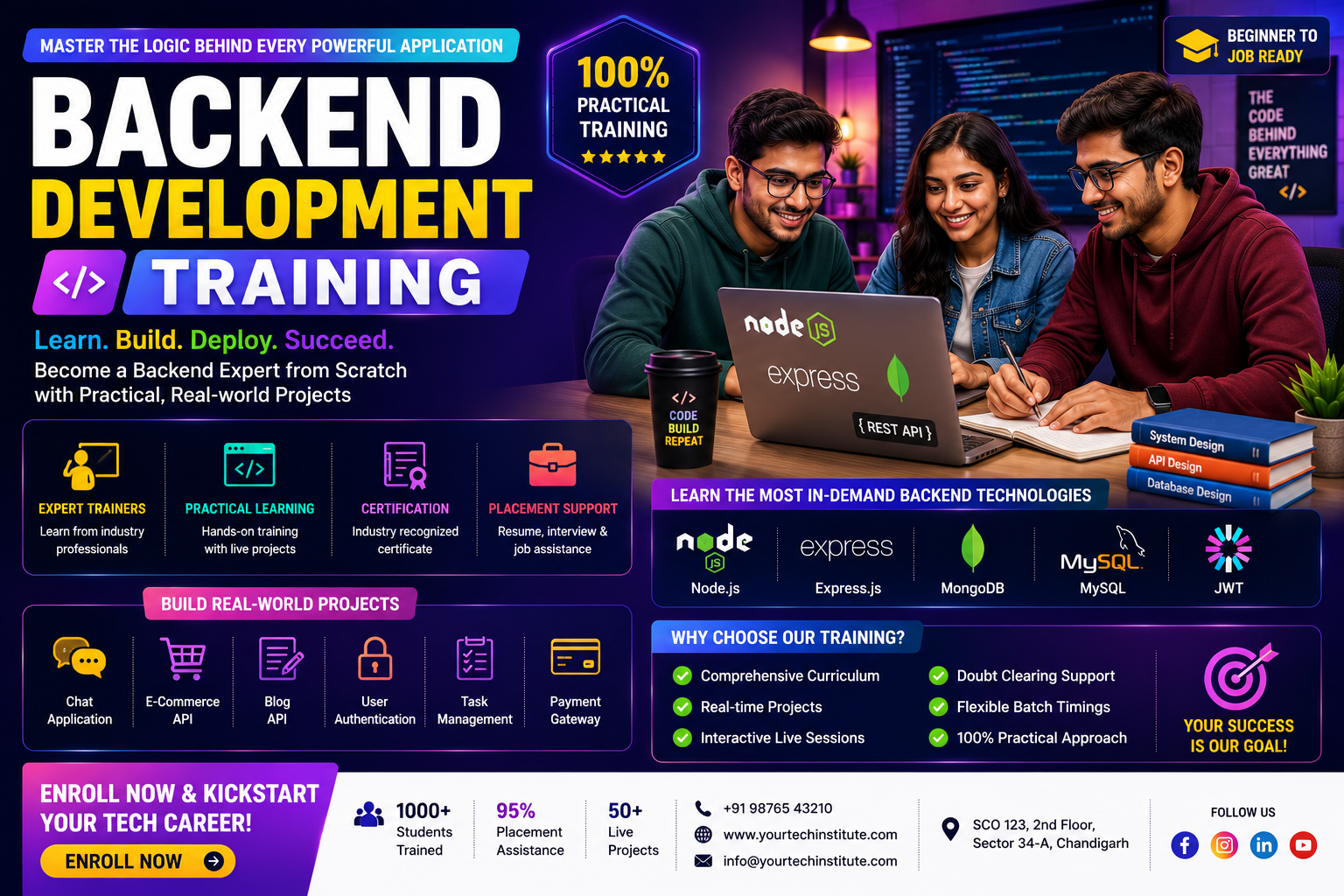
Introduction
Modern websites and web applications need more than attractive designs. They also need strong backend systems that manage data, security, and application functionality.
When users log in, make payments, or submit forms, backend systems handle all the processing behind the scenes.
Today, almost every business depends on web applications and digital platforms. Because of this, backend developers are in high demand across the technology industry.
Many students, beginners, freelancers, and working professionals are now searching for backend development training to build strong server-side programming skills.
Backend development plays a major role in creating secure, scalable, and high-performing applications.
A professional backend development course helps students understand:
- Server-side programming
- Database management
- API development
- Authentication systems
- Backend architecture
Webliquidinfotech Institute provides industry-oriented backend development training with practical learning, live projects, and beginner-friendly guidance. The institute focuses on helping students build real-world coding skills and become job-ready professionals.
In this complete guide, you will learn:
- What backend development is
- Why backend development is important
- Skills taught in backend training
- Career opportunities
- Benefits of practical learning
- How Webliquidinfotech Institute helps students succeed
What is Backend Development?
Backend development refers to the server-side part of web development.
It manages everything that happens behind the user interface.
Backend developers build systems that handle:
- Databases
- APIs
- User authentication
- Website functionality
- Server logic
Backend systems help websites work smoothly and securely.
Without backend development, websites cannot process user data or perform dynamic tasks.
How Backend Development Works
Backend systems connect the frontend of a website with databases and servers.
For example:
- Users enter information on a website
- The backend processes the request
- Data is stored in a database
- The server sends a response back to the user
This process happens in seconds.
Backend development is essential for modern web applications.
Technologies Used in Backend Development
Backend developers use different programming languages and tools.
Some popular backend technologies include:
- Node.js
- Express.js
- Python
- PHP
- Java
- MongoDB
- MySQL
These technologies help developers create secure and scalable systems.
Why Backend Development is Important Today
High Industry Demand
Businesses across every industry need secure and efficient web applications.
As a result, backend developers are in high demand.
Industries hiring backend developers include:
- IT companies
- E-commerce businesses
- Healthcare organizations
- Educational platforms
- SaaS companies
- Banking systems
- Startups
The demand continues growing rapidly.
Essential for Web Applications
Backend systems power many modern application features such as:
- User login systems
- Payment gateways
- Database management
- Online transactions
- API communication
Without backend development, advanced applications cannot function properly.
Excellent Career Opportunities
Learning backend development opens multiple career paths.
Students can work as:
- Backend Developers
- Node.js Developers
- API Developers
- Full Stack Developers
- Server-Side Programmers
These roles offer strong salary packages and long-term career growth.
Strong Future Scope
Digital platforms continue expanding worldwide.
Modern businesses heavily invest in:
- Cloud applications
- E-commerce systems
- Online services
- SaaS platforms
- Web applications
As a result, backend development remains a future-focused career field.
Skills Taught in Backend Development Training
A professional backend development course teaches both technical and practical skills.
Server-Side Programming
Students learn how backend systems process requests and manage application functionality.
This includes:
- Server logic
- Request handling
- Backend workflows
- Application architecture
These concepts form the foundation of backend development.
Node.js Development
Node.js is one of the most popular backend technologies.
Students learn:
- Server creation
- Routing
- Asynchronous programming
- Backend functionality
- Application performance optimization
Node.js helps create fast and scalable applications.
Express.js Framework
Express.js simplifies backend development.
Students learn how to:
- Build APIs
- Handle routes
- Manage middleware
- Create backend systems
Express improves development speed and efficiency.
Database Management
Databases store and organize application data.
Students learn:
- MongoDB basics
- MySQL concepts
- Data storage
- Database queries
- Database integration
Database knowledge is essential for backend programming.
REST API Development
APIs allow frontend and backend systems to communicate.
Students learn:
- API creation
- Request handling
- JSON responses
- API testing
- Integration techniques
API development is one of the most important backend skills today.
Authentication and Security
Backend systems must protect user information.
Students understand:
- Login systems
- User authentication
- JWT authentication
- Password encryption
- Application security basics
Security knowledge is essential for professional development.
Error Handling and Debugging
Students learn how to identify and fix backend issues.
Debugging improves:
- Coding quality
- Application stability
- Problem-solving abilities
These skills are valuable in real-world projects.
Live Project Development
Students work on practical backend projects during training.
Projects improve:
- Coding confidence
- Technical understanding
- Problem-solving skills
- Portfolio quality
Practical implementation improves learning significantly.
Why Practical Learning Matters in Backend Training
Backend development is a practical skill.
Students improve faster through implementation and project development.
Practical learning helps students understand:
- Real-world workflows
- API communication
- Database integration
- Backend architecture
- Team collaboration
Project-based learning also improves confidence and job readiness.
Common Challenges Beginners Face in Backend Development
Many beginners feel confused when starting backend programming.
However, proper guidance makes learning easier.
Understanding Server Logic
Backend systems can feel complex at first.
Step-by-step practical learning helps students understand workflows more clearly.
Database Management Confusion
Many beginners struggle with databases initially.
Practical exercises improve understanding and confidence.
API Development Challenges
API concepts may seem technical in the beginning.
Live project practice helps students understand API communication better.
How Webliquidinfotech Institute Helps Students Learn Backend Development
Choosing the right institute is important for building strong coding foundations.
Webliquidinfotech Institute focuses on practical learning and beginner-friendly education.
Industry-Oriented Curriculum
The curriculum is designed according to current industry requirements.
Students learn:
- Backend programming
- Node.js
- Express.js
- API development
- Database management
- Authentication systems
- Live project development
The course combines theory with practical implementation.
Beginner-Friendly Teaching
Many beginners feel nervous about server-side programming.
However, trainers at Webliquidinfotech Institute explain concepts step by step using simple language.
As a result, students learn comfortably and confidently.
Practical Learning Approach
Students receive hands-on training through:
- Live coding sessions
- API development practice
- Backend projects
- Interactive assignments
- Real-world implementation
This practical approach improves coding confidence and technical understanding.
Real-World Project Exposure
Students work on practical projects that improve understanding of:
- Backend workflows
- Database systems
- API integration
- Industry standards
This practical exposure improves job readiness significantly.
Career-Focused Training
The institute focuses on helping students become industry-ready professionals.
Students receive guidance for:
- Resume building
- Portfolio development
- Interview preparation
- Professional project presentation
These skills improve career opportunities significantly.
Who Should Join Backend Development Training?
This course is suitable for learners from different educational and professional backgrounds.
Students and Freshers
Students interested in server-side programming can build strong career opportunities through backend development training.
Working Professionals
Professionals looking to switch careers or improve technical skills can benefit greatly from this course.
Frontend Developers
Frontend developers can become full stack developers by learning backend technologies.
Freelancers
Freelancers can provide services such as:
- API development
- Backend integration
- Database management
- Website functionality development
- Server-side customization
Entrepreneurs and Business Owners
Business owners who understand backend systems can manage digital platforms more effectively.
Benefits of Learning at Webliquidinfotech Institute
Strong Backend Development Skills
Students improve:
- Server-side programming abilities
- API development understanding
- Database management skills
- Coding confidence
- Technical problem-solving abilities
These skills are highly valuable in the IT industry.
Better Career Opportunities
Backend development skills create opportunities across multiple industries.
Students can apply for high-demand technical roles.
Practical Experience
Project-based learning improves:
- Portfolio quality
- Technical understanding
- Coding confidence
- Industry readiness
Job Readiness
Students become familiar with:
- Professional coding standards
- Team collaboration
- Real-world workflows
- Client project handling
This improves workplace performance and interview preparation.
Portfolio Development
Students create projects during training that showcase:
- Backend systems
- APIs
- Database integration
- Real-world coding experience
Strong portfolios improve job and freelancing opportunities.
Career Opportunities After Course Completion
Students who complete backend development training can explore multiple career paths.
Backend Developer
Backend developers create server-side systems and application functionality.
Node.js Developer
Node.js developers build scalable backend applications using JavaScript.
API Developer
API developers create communication systems between applications.
Full Stack Developer
Full stack developers manage both frontend and backend development.
Freelance Backend Developer
Freelancers work independently with local and international clients.
Industries Hiring Backend Developers
Backend professionals are required in:
- IT companies
- E-commerce businesses
- SaaS companies
- Healthcare organizations
- Educational institutions
- Banking systems
- Startups
This creates strong long-term career opportunities.
Institute Details
Students interested in professional backend development training can connect with Webliquidinfotech Institute using the details below:
Address
SCO 114-115, 2nd Floor, Sector 34-A, Chandigarh, 160022
Phone Number
734-74O-5486
Website
The institute provides practical and industry-oriented training programs designed to help students build strong backend development and server-side programming skills.
Conclusion
Backend development has become one of the most important skills in modern web development. Businesses across every industry depend on secure and scalable backend systems to manage websites and web applications efficiently.
A professional backend development training course helps students learn server-side programming, database management, API development, authentication systems, and real-world project implementation through practical learning.
Learning backend development improves career opportunities because companies actively hire developers with modern programming skills and backend expertise.
Webliquidinfotech Institute helps students build strong technical foundations through practical learning, beginner-friendly teaching, live projects, and industry-oriented training. The institute focuses on helping learners gain coding confidence, project experience, and professional readiness.
Whether you are a student, freelancer, working professional, or entrepreneur, learning backend development can open doors to excellent career opportunities and long-term growth in the technology industry.
FAQs
1. What is backend development?
Backend development is the server-side part of web development that manages databases, APIs, authentication, and application functionality.
2. Can beginners learn backend development?
Yes, beginners can learn backend development through structured training and practical projects.
3. What skills are taught in backend development training?
Students learn Node.js, Express.js, databases, APIs, authentication systems, backend architecture, and project development.
4. Is backend development a good career option in 2026?
Yes, backend development remains one of the most in-demand career fields with excellent job opportunities worldwide.
5. Does Webliquidinfotech Institute provide practical backend training?
Yes, the institute focuses on practical learning, live coding sessions, backend projects, and industry-oriented assignments.
6. What career opportunities are available after completing backend development training?
Students can work as backend developers, Node.js developers, API developers, full stack developers, or freelance backend programmers.