
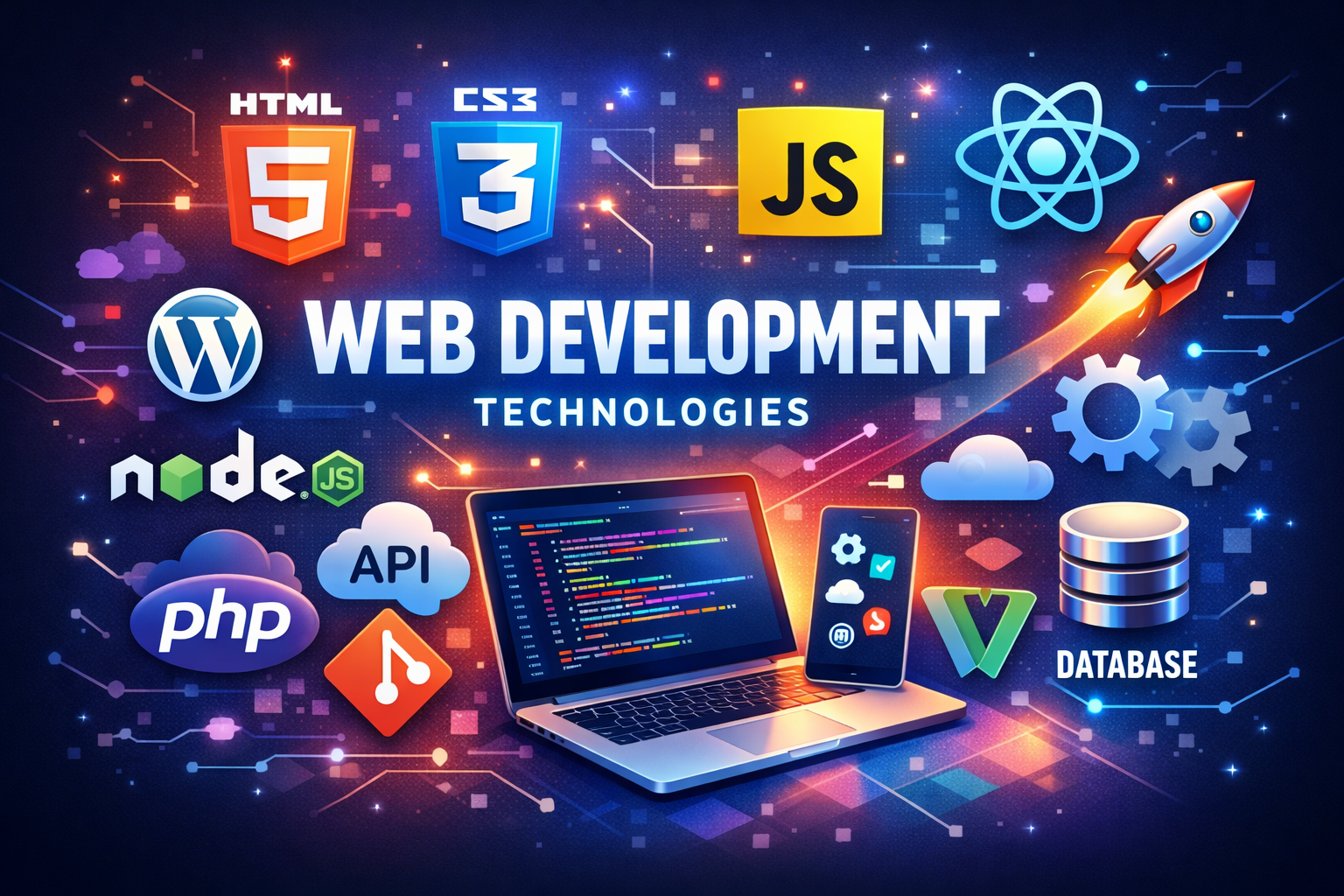
The technology industry is evolving rapidly, and web development is at the center of this transformation. Businesses today rely heavily on websites, web applications, and digital platforms to connect with customers and expand their services. As technology continues to grow, the demand for skilled developers who can build complete applications from front-end interfaces to back-end systems is increasing.
Full stack development has become one of the most valuable skills in the modern IT industry. Full stack developers have the ability to handle multiple aspects of web development, including user interface design, server-side programming, and database management. Because of this versatility, companies prefer developers who can manage entire applications rather than focusing on only one part of development.
Understanding the 10 Full Stack Development Trends in 2026 is essential for students, professionals, and anyone interested in building a career in the technology sector. These trends represent the technologies, tools, and approaches that will shape the future of web development in the coming years.
For beginners who want to learn these skills, professional training can make a huge difference. Institutes like Webliquid Infotech Institute provide structured learning programs that help students understand modern technologies and gain practical experience in web development.
In this guide, we will explore the major trends influencing full stack development in 2026, explain why they are important, and discuss how learning these technologies can help you build a successful career.
Understanding Full Stack Development
Before exploring the 10 Full Stack Development Trends in 2026, it is important to understand what full stack development actually means.
A full stack developer is a professional who works on both the front-end and back-end parts of a web application.
Front-End Development
The front-end refers to the visual part of a website that users interact with. This includes layout, navigation, buttons, images, and interactive elements.
Technologies commonly used for front-end development include:
- HTML
- CSS
- JavaScript
- React
- Angular
- Vue.js
Back-End Development
The back-end is responsible for managing data, servers, and application logic.
Common back-end technologies include:
- Node.js
- Python
- PHP
- Java
- Ruby
Database Management
Full stack developers also work with databases to store and manage information.
Popular database technologies include:
- MySQL
- MongoDB
- PostgreSQL
Because they understand both the client-side and server-side of applications, full stack developers are highly valuable in the tech industry.
10 Full Stack Development Trends in 2026
The technology landscape is constantly evolving, and developers must stay updated with new tools and frameworks. The 10 Full Stack Development Trends in 2026 highlight the innovations shaping the future of web development.
1. Artificial Intelligence Integration
Artificial intelligence is becoming an essential part of modern web applications. AI helps developers create smarter systems that can analyze user behavior, automate tasks, and improve user experiences.
Web applications today use AI for:
- Chatbots and virtual assistants
- Personalized content recommendations
- Automated data analysis
Full stack developers who understand AI integration will have strong career advantages in the future.
2. Serverless Architecture
Serverless computing is changing how developers build applications. Instead of managing servers manually, developers can focus on writing code while cloud platforms handle infrastructure.
Benefits of serverless architecture include:
- Reduced operational costs
- Faster development cycles
- Improved scalability
This trend allows developers to build applications more efficiently.
3. Progressive Web Applications (PWAs)
Progressive web applications combine the functionality of websites and mobile apps. They provide fast performance, offline access, and a smooth user experience.
Companies prefer PWAs because they work across devices and platforms without requiring separate mobile applications.
4. Microservices Architecture
Traditional applications often use a single system structure, but modern applications are shifting toward microservices architecture.
In this approach, applications are divided into smaller services that communicate with each other.
Advantages include:
- Easier maintenance
- Better scalability
- Faster development
This architecture allows developers to update specific features without affecting the entire system.
5. JavaScript Framework Evolution
JavaScript remains one of the most powerful programming languages in web development. Frameworks like React, Angular, and Vue continue to evolve with new features that improve performance and developer productivity.
Learning modern JavaScript frameworks is essential for anyone interested in full stack development.
6. API-First Development
Modern applications rely heavily on APIs to communicate between systems. API-first development focuses on designing APIs before building the rest of the application.
This approach helps developers create flexible and scalable systems.
7. Cloud-Based Development
Cloud computing has transformed how developers build and deploy applications. Platforms such as cloud hosting services allow developers to store data, run applications, and manage infrastructure more efficiently.
Cloud-based development ensures better performance and scalability.
8. Cybersecurity Integration
Security has become a major concern in modern web applications. Developers must ensure that applications are protected from cyber threats.
Key security practices include:
- Secure authentication
- Data encryption
- Vulnerability testing
Full stack developers who understand security concepts are highly valued by organizations.
9. Low-Code and No-Code Tools
Low-code platforms allow developers to build applications faster with minimal coding.
Although these tools simplify development, skilled developers are still needed to customize and manage complex applications.
This trend is helping businesses develop digital solutions more quickly.
10. DevOps and Automation
DevOps practices help developers collaborate with operations teams to deliver applications faster and more efficiently.
Automation tools help streamline tasks such as testing, deployment, and monitoring.
DevOps knowledge is becoming an important skill for full stack developers.
Why Understanding These Trends is Important
Learning about the 10 Full Stack Development Trends in 2026 helps developers stay competitive in the job market.
Career Relevance
Companies prefer developers who understand modern technologies and development practices.
Industry Demand
The demand for skilled developers continues to grow as more businesses move online.
Future Scope
Developers who stay updated with industry trends can explore career opportunities in emerging technologies.
How Webliquid Infotech Institute Helps Students Learn Modern Technologies
Learning modern development technologies requires structured training and guidance. Webliquid Infotech Institute provides professional courses designed to help students understand real-world web development.
Teaching Approach
The institute focuses on step-by-step learning that helps beginners understand programming concepts easily.
Industry-Oriented Curriculum
Courses are designed based on industry requirements, ensuring that students learn relevant technologies.
Practical Training
Students gain hands-on experience through:
- Live coding sessions
- Project-based learning
- Real-world development scenarios
This approach helps students build confidence and practical skills.
Who Should Enroll in Full Stack Development Training
Full stack development courses are suitable for many types of learners.
Students
Students who want to start a career in the technology industry can gain valuable skills through development training.
Working Professionals
Professionals from non-technical backgrounds can transition into the IT industry by learning development skills.
Creators and Freelancers
Entrepreneurs and freelancers can build websites and digital products for their businesses and clients.
Benefits of Learning at Webliquid Infotech Institute
Professional training offers several advantages.
Skill Development
Students learn programming languages, frameworks, and development tools used in modern applications.
Career Growth
Technical skills open doors to high-paying jobs in the technology industry.
Job Readiness
Practical training prepares students for real-world development roles.
Creative and Technical Advantages
Full stack development combines creativity and problem-solving, making it a rewarding career path.
Career Opportunities After Completing Full Stack Development Training
After completing training, students can explore various job roles.
Popular Job Roles
- Full Stack Developer
- Web Developer
- Software Engineer
- Backend Developer
- Front-End Developer
Freelancing Opportunities
Many developers choose freelancing as a flexible career option.
Freelancers work on projects such as:
- Website development
- Web application development
- E-commerce platforms
- Custom software solutions
Industry Sectors
Full stack developers are needed in many industries including:
- Technology companies
- Digital marketing agencies
- E-commerce businesses
- Startups
- Educational platforms
Conclusion
Full stack development continues to evolve as technology advances. Developers who understand modern tools and frameworks will have better opportunities to build successful careers in the IT industry.
The 10 Full Stack Development Trends in 2026 highlight the technologies that will shape the future of web development. From artificial intelligence to cloud-native systems and DevOps automation, these trends represent the direction in which modern software development is moving.
For beginners, learning these technologies through professional training programs can significantly improve career prospects. With the right guidance and practical experience, anyone can build the skills required to become a successful developer.
Institutes like Webliquid Infotech Institute help students understand modern technologies, build real projects, and prepare for professional development careers.
Institute Details
Students interested in learning web development technologies can enroll in professional training programs offered by Webliquid Infotech Institute.
Address:
SCO 114-115, 2nd Floor, Sector 34-A, Chandigarh, 160022
Phone Number:
8968967955
Website:
https://www.webliquidinfotech.com
The institute offers structured training programs that help students gain practical experience and industry-relevant skills.
FAQs
1. What is full stack development?
Full stack development refers to building both the front-end and back-end parts of a web application.
2. Why should I learn full stack development?
Full stack developers have versatile skills, making them highly valuable in the technology industry.
3. How long does it take to learn full stack development?
The duration depends on the course structure and learning pace, but most training programs take a few months to build strong foundational skills.
4. Do I need coding experience to start?
No prior coding experience is required. Many courses start from the basics and gradually move to advanced concepts.
5. Are full stack developers in demand?
Yes, full stack developers are in high demand because they can handle multiple aspects of application development.
6. Can I work as a freelancer after learning full stack development?
Yes, many developers work as freelancers and build websites and applications for businesses around the world.