
We live in a world where smartphones are extensions of human behavior. From ordering food to managing finances, mobile applications quietly power everyday decisions. Mobile app development is the structured practice of designing, building, testing, and maintaining software applications that run on mobile devices such as smartphones and tablets.
In this guide, we explore what mobile app development truly means, how it works behind the scenes, how much it costs, the technologies shaping it, and the challenges developers navigate daily. This article is written in a professional “we form”, blending technical clarity with a conversational tone to deliver maximum value.
Understanding Mobile App Development in Today’s World
At its core, mobile app development is the creation of software specifically optimized for mobile hardware and operating systems. Unlike traditional desktop software, mobile apps are designed for touch interfaces, limited screen space, and device-specific features like GPS, camera, accelerometer, and biometrics.
We typically classify mobile applications into:
- Native mobile apps (built for a specific platform like Android or iOS)
- Cross-platform apps (single codebase, multiple platforms)
- Progressive Web Apps (PWAs) (web apps with app-like behavior)
Each category serves different business goals, technical requirements, and user expectations.
The Broad Scope of Mobile App Development
Mobile app development extends far beyond coding. It encompasses multiple interconnected disciplines that ensure performance, usability, and scalability.
Key Areas Covered in Mobile App Development
- UI/UX design for intuitive user journeys
- Frontend development for visual interaction
- Backend development for data handling and logic
- API integration for third-party services
- Database management for secure data storage
- Security implementation to protect user data
- Testing and quality assurance
- Deployment and ongoing maintenance
A successful mobile app is not just functional—it is reliable, fast, secure, and delightful.
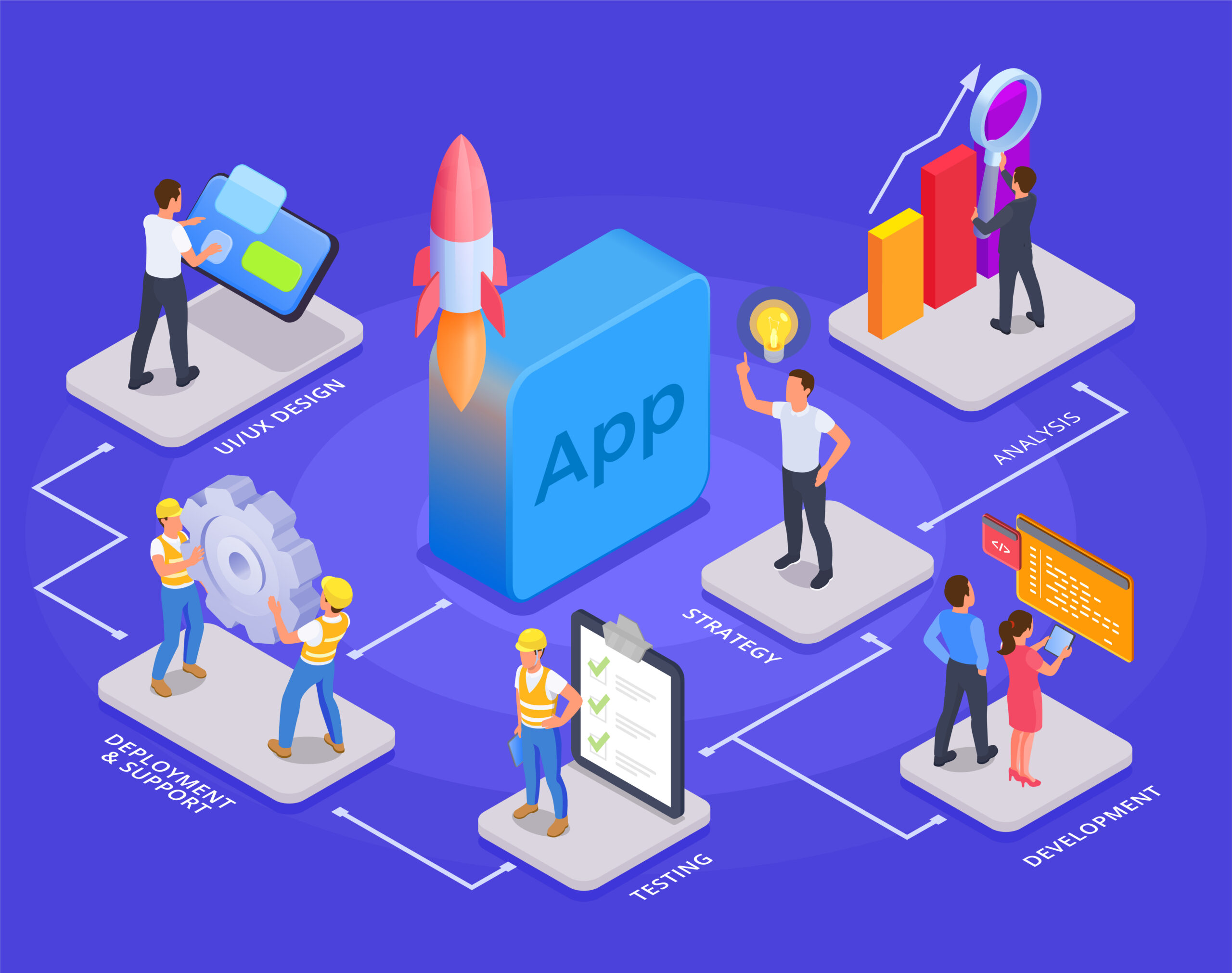
The End-to-End Mobile App Creation Workflow
Instead of using commonly repeated headings, let us break down the app creation lifecycle in a refined way.
1. Strategic Planning and Concept Validation
We begin by defining the app’s purpose, target audience, and value proposition. This phase includes:
- Market research
- Competitor analysis
- Feature prioritization
- Platform selection (Android, iOS, or both)
Clear planning reduces risk and aligns development with business goals.
2. Interface Design and User Experience Mapping
Design shapes the emotional connection users have with an app. We focus on:
- Wireframes and prototypes
- User flow diagrams
- Visual branding
- Accessibility standards
A well-designed interface improves engagement, retention, and conversion rates.
3. Technical Architecture and Development
This is where ideas transform into working software. Development includes:
- Frontend coding using Swift, Kotlin, React Native, or Flutter
- Backend development using Node.js, PHP, Python, or Firebase
- API and cloud service integration
Clean architecture ensures long-term scalability.
4. Quality Testing and Performance Optimization
Before launch, we rigorously test the app for:
- Functionality
- Usability
- Performance
- Security vulnerabilities
- Device and OS compatibility
Testing guarantees a smooth user experience across devices.
5. App Store Deployment and Maintenance
After approval on the Google Play Store or Apple App Store, continuous monitoring begins. Updates, bug fixes, and feature enhancements keep the app competitive.
How Much Does It Cost to Develop a Mobile App?
The cost of mobile app development varies widely based on complexity, features, and development approach. There is no one-size-fits-all price.
Estimated Cost Breakdown
- Basic app: $5,000 – $15,000
- Moderate complexity app: $15,000 – $50,000
- Advanced or enterprise app: $50,000 – $150,000+
Factors That Influence App Development Cost
- Platform choice (Android, iOS, cross-platform)
- Number of features
- UI/UX complexity
- Backend infrastructure
- Third-party integrations
- Development team location
Investing wisely in quality development reduces long-term maintenance costs.
Modern Technologies Shaping Mobile App Development
Innovation continuously reshapes mobile app development. We now build smarter, faster, and more personalized apps using advanced technologies.
Emerging Technologies in Mobile App Development
- Artificial Intelligence (AI) for personalization and automation
- Machine Learning (ML) for predictive analytics
- Internet of Things (IoT) for connected ecosystems
- Augmented Reality (AR) & Virtual Reality (VR) for immersive experiences
- 5G technology for ultra-fast performance
- Blockchain for secure transactions
These technologies redefine user expectations and expand app capabilities.
Cross-Platform vs Native Development: A Strategic Choice
Choosing the right development approach is critical.
Native Development
- High performance
- Full access to device features
- Platform-specific codebases
Cross-Platform Development
- Faster time-to-market
- Cost-effective
- Single codebase for multiple platforms
Popular frameworks like Flutter and React Native bridge the gap between performance and efficiency.
Key Challenges in Mobile App Development
Despite advancements, mobile app development presents ongoing challenges that require expertise and foresight.
Common Development Challenges
- Device and OS fragmentation
- Performance optimization
- Data security and privacy compliance
- User retention and engagement
- App store approval guidelines
Overcoming these challenges requires strategic planning, technical skill, and continuous improvement.
Why Mobile App Development Matters for Businesses
Mobile apps are no longer optional. They are strategic business assets.
Business Benefits of Mobile Applications
- Enhanced customer engagement
- Stronger brand presence
- Personalized user experiences
- Increased revenue opportunities
- Real-time data insights
A well-built mobile app strengthens digital transformation initiatives.
Future Outlook of Mobile App Development
The future of mobile app development is intelligent, immersive, and user-centric. We anticipate:
- Greater AI-driven automation
- Voice-enabled interfaces
- Deeper personalization
- Seamless cross-device experiences
Businesses that invest early in innovation will lead the next digital wave.
Conclusion
Mobile app development is the foundation of modern digital interaction. From idea validation to deployment and beyond, it blends strategy, creativity, and technology into one powerful process. As mobile usage continues to grow, businesses and developers who understand the full scope of mobile app development gain a decisive advantage. By embracing modern technologies, structured workflows, and user-first design, we create mobile applications that are not only functional but future-ready.
Frequently Asked Questions (FAQs)
1. What skills are required for mobile app development?
Mobile app development requires programming knowledge, UI/UX understanding, problem-solving skills, and familiarity with mobile platforms.
2. Is mobile app development a good career choice?
Yes, mobile app development offers strong demand, competitive salaries, and long-term growth opportunities.
3. How long does it take to develop a mobile app?
Development timelines range from a few weeks for simple apps to several months for complex applications.
4. Can one app work on both Android and iOS?
Yes, cross-platform frameworks allow a single app to run on both platforms efficiently.
5. How often should a mobile app be updated?
Apps should be updated regularly to improve performance, security, and user experience.