
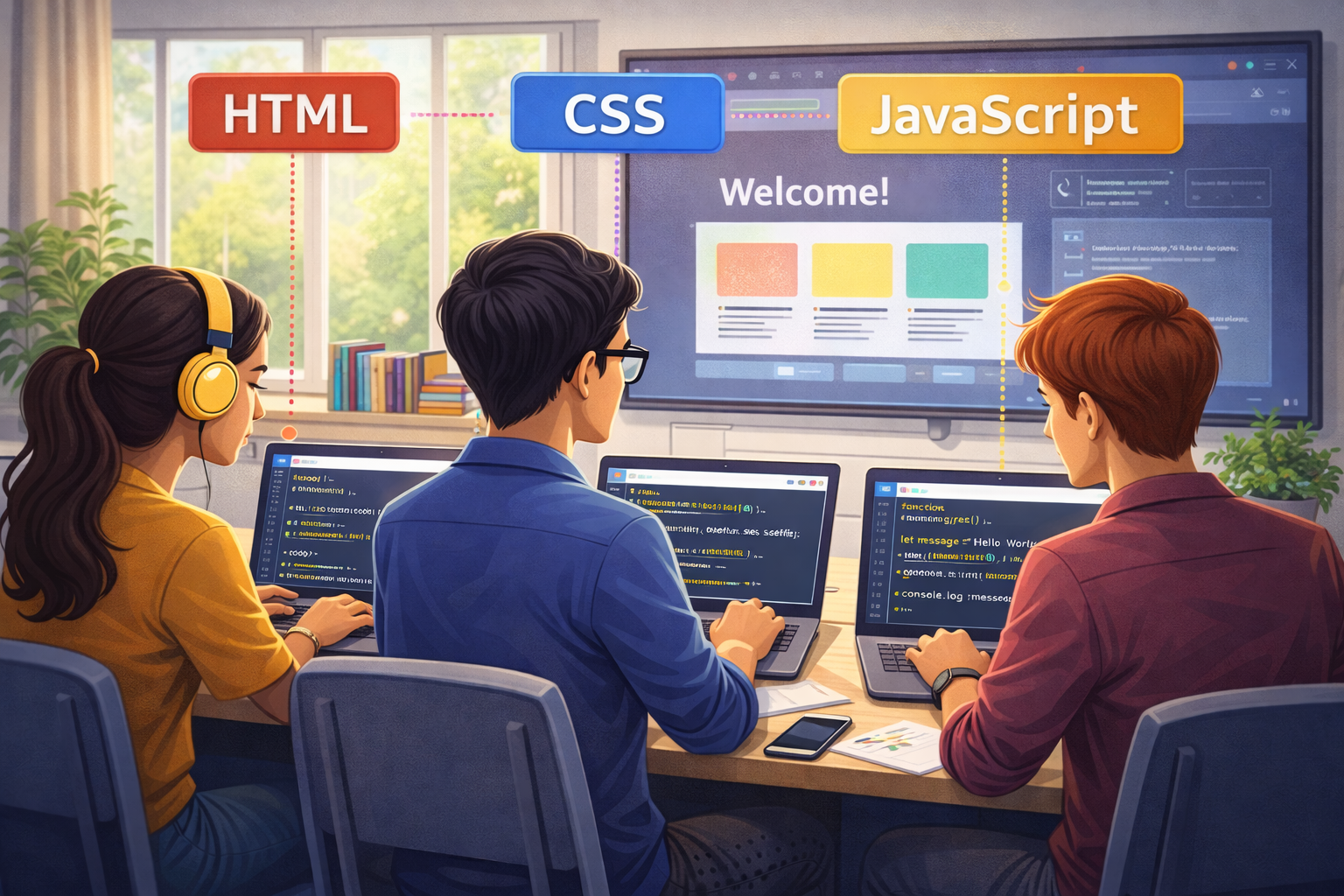
Technology is changing rapidly, and web development has become one of the most popular career choices for students and professionals. Businesses, startups, and organizations across the world need skilled developers to build and maintain websites and web applications. Because of this growing demand, many people are interested in learning development skills and starting a career in the IT industry.
However, beginners often feel confused when choosing between different career paths in development. One of the most common questions students ask is about the front end vs full stack developer career path. Understanding the difference between these roles is important before starting any training program or professional journey.
Both roles play an important part in building websites and digital platforms. Front-end developers focus mainly on the visual part of a website that users interact with, while full-stack developers handle both the front-end and back-end development of an application.
For students who want to build strong technical skills, professional training is essential. Institutes like Webliquid Infotech Institute provide industry-focused training programs that help beginners understand modern web development technologies and prepare for real-world projects.
This guide will help you understand the differences between these roles, their career opportunities, and how proper training can help you succeed in the web development industry.
Understanding the Role of a Front-End Developer
A front-end developer is responsible for designing and building the visual and interactive parts of a website. Everything that users see and interact with on a website is created by front-end developers.
Key Responsibilities of a Front-End Developer
Front-end developers work with design and code to ensure websites look attractive and function smoothly. Their responsibilities usually include:
- Creating website layouts
- Developing responsive designs for mobile devices
- Implementing interactive elements
- Improving website performance
- Ensuring compatibility across browsers
Technologies Used by Front-End Developers
Some of the most commonly used technologies include:
- HTML
- CSS
- JavaScript
- React
- Angular
- Vue.js
These technologies help developers build fast and responsive websites that provide a great user experience.
Front-end development is ideal for individuals who enjoy working with design, creativity, and user experience while also writing code.
Understanding the Role of a Full Stack Developer
A full-stack developer has a broader role in web development. Instead of focusing on only the front-end interface, they work on both the front-end and the back-end of a web application.
This means they are responsible for building the entire system behind a website, including the server, database, and application logic.
Key Responsibilities of a Full Stack Developer
A full-stack developer typically handles tasks such as:
- Designing the user interface
- Developing server-side functionality
- Managing databases
- Building APIs
- Deploying applications
- Maintaining the overall system
Technologies Used by Full Stack Developers
Full-stack developers work with a wide range of technologies including:
Front-end technologies:
- HTML
- CSS
- JavaScript
Back-end technologies:
- Node.js
- PHP
- Python
- Java
Database technologies:
- MySQL
- MongoDB
- PostgreSQL
Because they manage both sides of development, full-stack developers are highly valued in the tech industry.
Key Differences Between Front-End and Full Stack Developers
Understanding the front end vs full stack developer comparison helps students decide which path suits their interests and career goals.
Scope of Work
Front-end developers focus on the user interface and design elements of a website. Their goal is to create visually appealing and user-friendly web pages.
Full-stack developers work on the entire application, including the client-side interface and the server-side logic.
Skill Requirements
Front-end developers require strong knowledge of design principles, responsive layouts, and JavaScript frameworks.
Full-stack developers need both front-end skills and back-end programming knowledge, which makes their role broader and more technical.
Learning Curve
Front-end development usually has a shorter learning curve because it focuses on fewer technologies.
Full-stack development requires learning multiple technologies and systems, making it more challenging but also more versatile.
Career Flexibility
Front-end developers specialize in user experience and interface development.
Full-stack developers can work across different areas of development, which often provides more flexibility in career opportunities.
Why Choosing the Right Development Path is Important
The technology industry is highly competitive, and choosing the right career path can influence long-term success. Understanding the front end vs full stack developer roles helps individuals select the learning path that matches their interests and goals.
Growing Industry Demand
Web development remains one of the most in-demand skills globally. Companies require developers to build websites, applications, and digital platforms.
Both front-end and full-stack developers are needed across industries such as:
- IT services
- E-commerce
- Healthcare
- Education
- Finance
- Digital marketing
Future Scope
As businesses continue to move online, the demand for skilled developers will continue to grow. Technologies like artificial intelligence, cloud computing, and mobile applications are also increasing the need for developers who can build advanced web systems.
Developers who continue learning new technologies will always have strong career opportunities.
How Webliquid Infotech Institute Helps Students Build a Career
Learning development skills requires proper guidance, practical training, and industry exposure. Webliquid Infotech Institute provides professional training programs that help students understand modern technologies and build real-world skills.
Industry-Oriented Curriculum
The courses are designed to match current industry requirements. Students learn the latest technologies used by professional developers.
Practical Training
Instead of focusing only on theory, the institute emphasizes practical learning through:
- Real-world projects
- Coding assignments
- Hands-on training
- Portfolio development
Expert Trainers
Students are guided by experienced trainers who provide step-by-step instruction and mentorship.
Real-World Exposure
Training programs include practical scenarios that prepare students for actual development work.
Through structured learning programs, students gain the knowledge and confidence needed to start their careers in the tech industry.
Who Should Enroll in Web Development Courses
Web development courses are suitable for a wide range of learners.
Students
Students who want to start a career in the IT industry can gain valuable technical skills through professional training programs.
Working Professionals
Professionals from other fields can switch to the technology sector by learning development skills.
Creators and Freelancers
Content creators, entrepreneurs, and freelancers can build their own websites and digital platforms after learning development.
Web development knowledge also helps freelancers offer services like website creation, maintenance, and customization.
Benefits of Learning at Webliquid Infotech Institute
Professional training offers many advantages for individuals who want to build a successful career.
Skill Development
Students learn technical skills that are essential for building modern websites and applications.
Career Growth
Learning development technologies opens opportunities for careers in software development, web design, and application development.
Job Readiness
Practical training prepares students for real job roles by helping them build portfolios and project experience.
Creative and Technical Skills
Web development combines creativity with technical problem-solving, making it an exciting and rewarding career path.
Career Opportunities After Completing Training
After completing development training, students can explore multiple career opportunities.
Popular Job Roles
- Front-End Developer
- Full Stack Developer
- Web Designer
- Web Application Developer
- UI Developer
- Software Engineer
Freelancing Opportunities
Many developers choose freelancing as a career path. They can work with international clients and build websites for businesses around the world.
Freelancers often work on projects such as:
- Website design
- E-commerce development
- WordPress customization
- Web application development
Industry Sectors
Developers are needed in almost every industry including:
- Technology companies
- Digital marketing agencies
- Startups
- Educational platforms
- Online marketplaces
With the right training and experience, developers can build stable and rewarding careers.
Conclusion
Choosing between front-end and full stack development depends on your interests, career goals, and learning preferences. Both roles play an important part in building modern websites and applications.
Understanding the front end vs full stack developer difference helps beginners make informed decisions about their learning path. With the right training and dedication, anyone can build a successful career in the web development industry.
Learning from a professional institute ensures that students gain practical experience, industry knowledge, and the confidence required to succeed in the competitive technology field.
Institute Details
Students interested in learning development skills can enroll in professional training programs offered by Webliquid Infotech Institute.
Address:
SCO 114-115, 2nd Floor, Sector 34-A, Chandigarh, 160022
Phone:
8968967955
Website:
https://www.webliquidinfotech.com
The institute provides structured training programs designed to help students learn industry-relevant technologies and build practical development skills.
FAQs
1. What is the main difference between a front-end developer and a full-stack developer?
A front-end developer focuses on the design and user interface of a website, while a full-stack developer works on both the front-end interface and back-end server functionality.
2. Which career is better for beginners?
Beginners often start with front-end development because it is easier to learn initially. Later, they can expand their knowledge to full-stack development.
3. How long does it take to learn web development?
The duration depends on the course and learning pace. Many training programs can help students gain basic development skills within a few months.
4. Do I need coding experience to join a web development course?
No prior coding experience is required for most beginner courses. Training programs usually start from the basics and gradually move to advanced concepts.
5. Are web development jobs in demand?
Yes, web development skills are highly in demand across industries because businesses rely heavily on websites and online platforms.
6. Can I work as a freelancer after learning web development?
Yes, many developers work as freelancers and build websites for businesses, startups, and clients around the world