
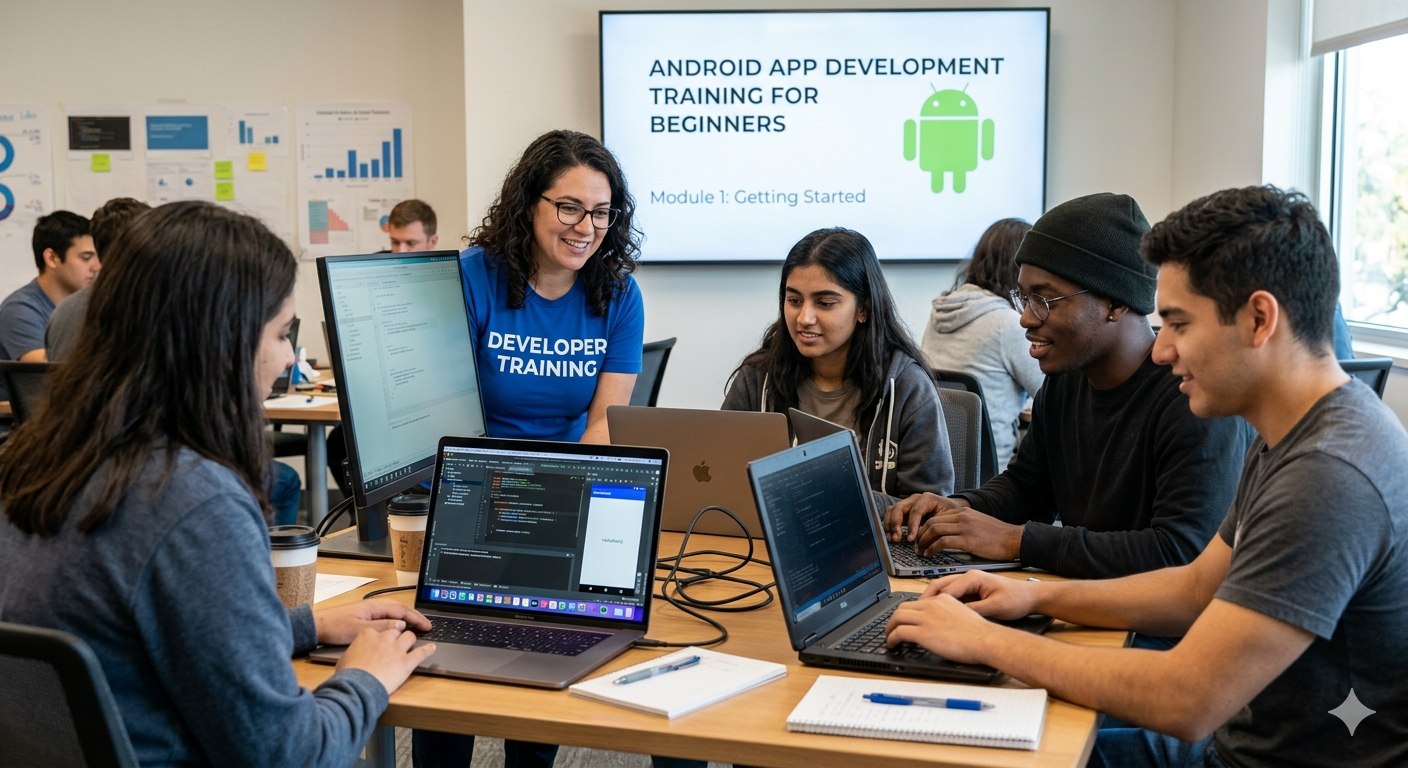
Smartphones have completely changed the way people interact with technology. Today, mobile applications are used for almost everything—from communication and shopping to education and entertainment. Among all mobile platforms, Android remains the most widely used operating system across the world. Because of this, the demand for skilled Android developers continues to grow every year.
Many students and professionals are interested in learning how mobile apps are created and how they can build a career in the mobile development industry. This is where Android App Development: Complete Guide for Beginners (2026) becomes an important topic for anyone who wants to enter the technology field.
Android app development involves designing, building, testing, and launching applications that run on Android devices such as smartphones, tablets, and smart TVs. Learning this skill allows individuals to create useful apps that can reach millions of users worldwide.
However, beginners often feel confused about where to start. They may not know which programming languages to learn, which tools to use, or how to gain practical experience. With proper guidance and structured training, anyone can start learning mobile app development and build a successful career in this field.
Institutes like Webliquid Infotech Institute help students learn the fundamentals of mobile development through professional training programs. These programs focus on practical skills, modern development tools, and real-world projects so students can become confident developers.
This guide will explain the basics of Android development, its importance in the modern digital world, career opportunities in the field, and how proper training can help beginners start their journey in the mobile app development industry.
Understanding Android App Development
Android app development refers to the process of creating applications for devices that run the Android operating system. Developers use programming languages, frameworks, and development tools to build apps that users can download from platforms like the Google Play Store.
The goal of Android developers is to create applications that are fast, secure, user-friendly, and functional across different devices.
Key Components of Android App Development
Mobile applications consist of several important components that work together to deliver a smooth user experience.
User Interface (UI)
The user interface is the visual part of the application that users interact with. It includes buttons, menus, images, and navigation elements.
Application Logic
Application logic controls how the app behaves when users interact with it. This includes processing data, managing user actions, and connecting with servers.
Database Integration
Many mobile applications store and retrieve data. Developers integrate databases to manage user information, settings, and content.
Testing and Deployment
Before launching an app, developers test it on multiple devices to ensure it works properly. After testing, the application can be published on app stores.
Understanding these components is the first step in mastering Android App Development: Complete Guide for Beginners (2026).
Technologies Used in Android Development
To build Android applications, developers use several tools and programming languages.
Android Studio
Android Studio is the official development environment used for creating Android applications. It provides tools for coding, testing, debugging, and performance monitoring.
Programming Languages
Two main programming languages are used for Android development:
Java
Java has been used for Android development for many years and remains a popular choice among developers.
Kotlin
Kotlin is a modern programming language supported by Google. It is easier to write and reduces coding errors.
XML
XML is used to design the layout and structure of mobile app interfaces.
APIs and Libraries
Developers also use APIs and libraries to add features such as location services, payment systems, and notifications.
Learning these technologies helps beginners understand how professional Android applications are built.
Why Android App Development is Important Today
Mobile applications are now a major part of the digital economy. Businesses rely on apps to connect with customers, provide services, and expand their reach.
Growing Mobile App Market
The number of mobile users continues to increase every year. Millions of apps are downloaded daily for different purposes such as:
- Online shopping
- Banking services
- Education platforms
- Healthcare apps
- Social networking
Because of this growth, companies are constantly looking for skilled developers who can create high-quality applications.
Career Relevance
Android development offers strong career opportunities for individuals interested in programming and technology.
Developers can work in various roles such as:
- Android app developer
- mobile application engineer
- software developer
- UI developer for mobile apps
Understanding Android App Development: Complete Guide for Beginners (2026) helps learners build the foundation needed for these roles.
Industry Demand
Technology companies, startups, and digital agencies require mobile developers to build applications for their businesses. Skilled developers are always in demand because mobile apps play a crucial role in digital services.
Future Scope
The future of Android development is promising. Emerging technologies such as artificial intelligence, cloud computing, and the Internet of Things are expanding the capabilities of mobile applications.
Developers who continuously update their skills will have long-term career opportunities in the technology sector.
How Webliquid Infotech Institute Helps Students Learn Android Development
Learning mobile development requires practical training, guidance from experts, and exposure to real-world projects. Webliquid Infotech Institute offers structured training programs that help students understand Android development step by step.
Teaching Approach
The institute focuses on a practical and student-friendly teaching approach. Complex concepts are explained in simple language so beginners can easily understand programming fundamentals.
Industry-Oriented Curriculum
The training curriculum is designed according to current industry standards. Students learn technologies and tools used by professional developers.
Topics often include:
- Java and Kotlin programming
- Android Studio development
- user interface design
- mobile application architecture
- app testing and debugging
Practical Training and Real-World Exposure
Practical experience is essential for becoming a skilled developer. Students work on projects that simulate real application development scenarios.
Through hands-on practice, students learn how to design and build fully functional Android applications.
Who Should Enroll in Android Development Courses
Android development training is suitable for many types of learners who want to build technical skills.
Students
Students who want to start a career in the technology sector can learn mobile development as a valuable skill.
Working Professionals
Professionals from other industries can switch to the IT field by learning programming and mobile app development.
Creators and Freelancers
Entrepreneurs, content creators, and freelancers can build their own applications or offer mobile development services to clients.
Learning Android App Development: Complete Guide for Beginners (2026) allows individuals to explore many opportunities in the digital world.
Benefits of Learning at Webliquid Infotech Institute
Choosing the right training institute plays an important role in career success. Webliquid Infotech Institute offers several advantages for students.
Skill Development
Students gain practical programming knowledge and learn how to build real mobile applications.
Career Growth
Mobile development skills open doors to job opportunities in technology companies and startups.
Job Readiness
Training programs include practical assignments and projects that help students build professional portfolios.
Creative and Technical Advantages
Mobile app development combines creativity and technical problem solving. Developers can transform ideas into real applications that people use every day.
Career Opportunities After Completing Android Development Training
After completing professional training, students can explore many career paths in the technology industry.
Popular Job Roles
- Android App Developer
- Mobile Application Developer
- Software Engineer
- UI Developer
- Application Tester
Freelancing Opportunities
Many developers work independently and build applications for clients around the world. Freelancing allows developers to work on different types of projects and earn income through global platforms.
Freelancers can offer services such as:
- custom Android application development
- mobile app design
- application maintenance
- app updates and feature integration
Industry Sectors
Mobile developers are needed in many industries including:
- technology companies
- e-commerce platforms
- education technology
- healthcare applications
- finance and banking services
With proper training and experience, developers can build long-term careers in these sectors.
Conclusion
Mobile technology continues to transform the way people interact with digital services. As smartphones become more powerful and widely used, mobile applications play an important role in connecting businesses with users.
Learning Android development is one of the best ways to enter the technology industry. It provides opportunities to build innovative applications, solve real-world problems, and create digital products that reach millions of people.
The Android App Development: Complete Guide for Beginners (2026) highlights how beginners can start learning development skills and build successful careers in mobile technology.
With proper guidance, practical training, and industry-focused learning, students can gain the knowledge required to become professional developers.
Institutes that offer structured training programs help learners build strong foundations and gain real-world experience that prepares them for the rapidly growing technology industry
Institute Details
Students who want to start learning Android development can enroll in professional training programs offered by Webliquid Infotech Institute.
Address:
SCO 114-115, 2nd Floor, Sector 34-A, Chandigarh, 160022
Phone Number:
8968967955
Website:
https://www.webliquidinfotech.com
The institute provides structured training designed to help beginners understand programming concepts and develop practical skills needed for mobile application development.
FAQs
1. What is Android app development?
Android app development is the process of creating applications that run on Android devices such as smartphones and tablets using programming languages and development tools.
2. Do beginners need coding experience to learn Android development?
No prior coding experience is required. Most beginner courses start with programming basics and gradually move toward advanced development concepts.
3. How long does it take to learn Android app development?
Learning duration depends on the course and practice level, but beginners can understand basic development concepts within a few months of structured training.
4. Which programming language is used for Android development?
Java and Kotlin are the most commonly used programming languages for developing Android applications.
5. Is Android development a good career option?
Yes. Mobile applications are widely used worldwide, and skilled Android developers are in high demand across industries.
6. Can I work as a freelancer after learning Android development?
Yes. Many developers build applications for clients and businesses as freelancers and earn income through online platforms.